a collaboration
|
Two Women
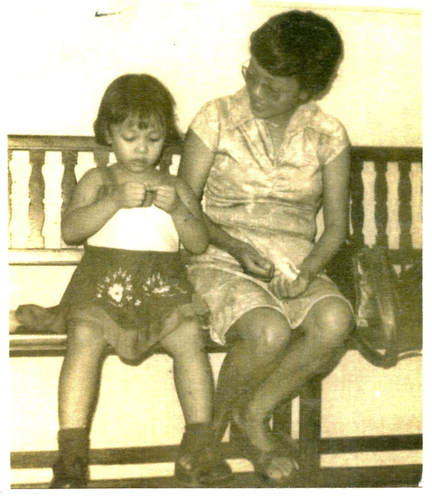
This is a mother - daughter collaboration which tells stories of their past and present lives as Filipino Americans. The global diaspora weaves many narratives of Filipino lives, this is our story. Oral history, written word, artistic expressions and ethnic identity development work are part of a collaboration we are calling "Mga Kwento, Many Stories". Timelines in Development
MOTHER WWII. Jungle Birth. Childhood. Education. Artist. Teacher. Marriage. Motherhood. Martial Law. Resistance. Immigration. Assimilation. Introspection. Art DAUGHTER Birth. Martial Law. Dictatorship. Immigration. Freedom. Assimilation. Education. Identity Diffusion. Resistance. Immersion. Introspection. Awareness. Acceptance. Articulation. |
About Me
When I was a young child, new to North America, my parents would tuck me and my brother into bed every night. My father, would “kamut” (scratch) our backs to lull us to sleep. My mother would tell us childhood fairytales of jungle people, witches, memories of her imaginative and unstructured play, stories of her life in a small city in the island of Mindanao. They were oral stories passed down from her parents and older siblings. As newly transplanted tropical people, the novelty of winter chill, snowflakes and blizzards kept us homebound in Canada. My parents warmed our domicile with the aroma of Filipino cuisine, stories from tropical islands and unspoken love displayed by their caring and generosity. As an immigrant family living in North America, our survival was an aggregate of love, hard work, sacrifice, adaptation, perseverance, mobility, appreciation of the natural world and intellectual curiosity. It wasn’t until adulthood that I was better able to appreciate the complexities of our lives. It is with this evolving adult lens that I piece together our family story.
In mid-August 2017, during a heightened time of overt division and expression of hatred, white nationalists (men and women) marched through the University of Virginia campus chanting “You will not replace us,” and “Jews will not replace us.” I was frightened, even from afar. At the time I was on vacation with my husband and children at the time in Martha's Vineyard. A part of me wanted to hide and stay sheltered away from the social crisis. I didn’t want my vacation to end. Alas, the palpability of what was happening (has been happening?) was right in front of us as we traveled back home to Boston where another “Right to Speech” rally was congregating. While scrolling down my Facebook feed, I discovered Brené Brown’s response to Charlottesville on the ferry boat ride back to the mainland. As a social worker, I gravitate toward her perspective for guidance. Brené emphasized the theme, "owning our story". “The power of owning our story gives us a chance to write the ending. If we don’t own our story the story owns us.” (B. Brown, 2017) [Video clip below]
This collaboration is a gathering point of years of hard work from my artist mother, Lewanda Lim, and my work as an adult and child psychotherapist with a special interest in racial identity development, bi-cultural identity and the impact of immigration on families, children and relationships. Mga Kwento: many stories, starts with owning our part of the story, sharing it with the wider community and embracing it to empower other American immigrants.
I look forward to this journey of exploration and growth,
Aimée
When I was a young child, new to North America, my parents would tuck me and my brother into bed every night. My father, would “kamut” (scratch) our backs to lull us to sleep. My mother would tell us childhood fairytales of jungle people, witches, memories of her imaginative and unstructured play, stories of her life in a small city in the island of Mindanao. They were oral stories passed down from her parents and older siblings. As newly transplanted tropical people, the novelty of winter chill, snowflakes and blizzards kept us homebound in Canada. My parents warmed our domicile with the aroma of Filipino cuisine, stories from tropical islands and unspoken love displayed by their caring and generosity. As an immigrant family living in North America, our survival was an aggregate of love, hard work, sacrifice, adaptation, perseverance, mobility, appreciation of the natural world and intellectual curiosity. It wasn’t until adulthood that I was better able to appreciate the complexities of our lives. It is with this evolving adult lens that I piece together our family story.
In mid-August 2017, during a heightened time of overt division and expression of hatred, white nationalists (men and women) marched through the University of Virginia campus chanting “You will not replace us,” and “Jews will not replace us.” I was frightened, even from afar. At the time I was on vacation with my husband and children at the time in Martha's Vineyard. A part of me wanted to hide and stay sheltered away from the social crisis. I didn’t want my vacation to end. Alas, the palpability of what was happening (has been happening?) was right in front of us as we traveled back home to Boston where another “Right to Speech” rally was congregating. While scrolling down my Facebook feed, I discovered Brené Brown’s response to Charlottesville on the ferry boat ride back to the mainland. As a social worker, I gravitate toward her perspective for guidance. Brené emphasized the theme, "owning our story". “The power of owning our story gives us a chance to write the ending. If we don’t own our story the story owns us.” (B. Brown, 2017) [Video clip below]
This collaboration is a gathering point of years of hard work from my artist mother, Lewanda Lim, and my work as an adult and child psychotherapist with a special interest in racial identity development, bi-cultural identity and the impact of immigration on families, children and relationships. Mga Kwento: many stories, starts with owning our part of the story, sharing it with the wider community and embracing it to empower other American immigrants.
I look forward to this journey of exploration and growth,
Aimée